

How NASA built trust, inspired audiences, and delivered a shared vision through clarity, consistency, and storytelling.
In the world of communications, some moments transcend messaging. They become defining moments—shared stories that resonate across industries, generations, and geographies.
The successful completion of the Artemis II mission, part of the broader Artemis program, is one of those moments.
Artemis II is a crewed mission that sent astronauts around the Moon and safely returned them to Earth as part of NASA’s next phase of deep space exploration.
As a result, Artemis II stands not only as a milestone in exploration, but as a powerful example of how strategic communication builds trust, inspires audiences, and connects people to a shared vision.
A Mission Defined by More than Milestones
From initial planning through its successful return, Artemis II demonstrated that modern exploration is as much about communication as it is about execution.
The mission—centered on astronauts traveling aboard the Orion spacecraft for a lunar flyby and safe return to Earth—was never positioned as a purely technical advancement. It was consistently communicated as a step forward for humanity.
That distinction matters.
Rather than focusing solely on engineering complexity, NASA positioned Artemis II around:
- Progress
- Possibility
- Shared purpose
This is where strategic communication begins—not with information, but with intention.
In communications, the true impact of a moment is often understood only in hindsight.

NASA’s Space Launch System rocket launches carrying the Orion spacecraft with NASA astronauts Reid Wiseman, commander; Victor Glover, pilot; Christina Koch, mission specialist; and CSA (Canadian Space Agency) astronaut Jeremy Hansen, mission specialist on NASA’s Artemis II mission, Wednesday, April 1, 2026, from Operations and Support Building II at NASA’s Kennedy Space Center in Florida. NASA’s Artemis II mission will take Wiseman, Glover, Koch, and Hansen on a 10-day journey around the Moon and back aboard SLS rocket and Orion spacecraft launched at 6:35pm EDT from Launch Complex 39B. Photo Credit: (NASA/Bill Ingalls)
Clarity Scales with Complexity
Space exploration is inherently complex, involving thousands of systems, years of preparation, and extraordinary precision. Yet throughout Artemis II, NASA maintained a high level of clarity.
Rather than overwhelming audiences with technical detail, the mission was communicated through:
- Clear, accessible explanations
- Consistent messaging across channels
- A focus on what the mission means—not just how it works
This approach demonstrates a core principle of strategic communication: Clarity is what allows complexity to be understood and trusted.
Consistency Builds Trust
Trust is not built in a single moment. It is built over time, through consistency.
Artemis II reinforced trust by maintaining a steady communication cadence across the entire mission lifecycle:
- Pre-launch preparation and expectations
- In-mission updates and visual storytelling
- Post-mission confirmation of a safe and successful return
That consistency transforms information into confidence.

(April 6, 2026) – The Artemis II crew captures a faint view of a crescent Earth above the horizon on the Moon’s far side. Image Credit: NASA
Storytelling That Inspires
Facts inform—but stories inspire.
Artemis II succeeded because it connected technical achievement to human experience, giving audiences a way to see themselves in the mission.
NASA anchored the story in what people could relate to:
- A journey beyond Earth that still centered on what it means for life on Earth
- A mission defined not only by achievement, but by safe return
- A narrative of curiosity, progress, and collective possibility
Through imagery, astronaut perspectives, and a clear narrative arc, NASA made the experience:
- Relatable
- Emotional
- Memorable
The mission wasn’t just about reaching the Moon and returning safely. It was about what that journey represents—and why it matters.

(April 6, 2026) – Midway through their lunar observation period, the Artemis II crew members – Reid Wiseman, Victor Glover, Christina Koch, and Jeremy Hansen – pause to turn the camera around for a selfie inside the Orion spacecraft. Image Credit: NASA
A Shared Vision, Clearly Communicated
One of the most powerful aspects of Artemis II was its ability to create alignment around a shared vision.
NASA did more than communicate what was happening. It clarified:
- Where we are going
- Why it matters
- What it represents for the future
That clarity allowed audiences to connect the mission to something larger than the moment.
Strategic communication, at its best, creates this kind of alignment—where people don’t just receive information, but understand their place within it.
The Emotional Architecture of Return
What makes Artemis II especially powerful is not only that it went to space—but that it returned safely.
Return is a deeply human narrative anchor. It signals completion, safety, and learning, allowing audiences to move from awe into understanding.
Artemis II followed a clear emotional arc: anticipation → wonder → execution → return → reflection.
Strong communication supports this arc, ensuring audiences don’t just witness achievement—they internalize it.

NASA’s Orion spacecraft with Artemis II crewmembers NASA astronauts Reid Wiseman, commander; Victor Glover, pilot; Christina Koch, mission specialist; and CSA (Canadian Space Agency) astronaut Jeremy Hansen, mission specialist aboard is seen as it lands in the Pacific Ocean off the coast of California, Friday, April 10, 2026. Image Credit: NASA/Bill Ingalls
Lessons for Communications Leaders
From a strategic communications perspective, Artemis II offers these enduring lessons:
- Start with intention: Before communication begins, define what the story is meant to achieve.
- Clarity must scale with complexity: The more complex the subject, the more disciplined the narrative must be.
- Stay consistent across the lifecycle: Communication is not a moment. It is a system.
- Connect information to human experience: People engage with what they can relate to and feel.
- Reinforce the bigger picture: Shared vision turns audiences into participants.
The Brilliance Behind the Message
At Starry Blue Brilliance, we believe communication is not just about delivering information—it is about creating clarity, building trust, and connecting people to something meaningful.
Artemis II reflects that principle at a global scale. It shows what becomes possible when storytelling, strategy, and science align around a unified purpose—and when that purpose is carried through to a safe and successful return.
It is a powerful reminder that when we reach beyond our world, we bring back perspective, connection, and possibility—and that effective communication is what allows those outcomes to be understood, shared, and believed.
Featured image:
Artemis II Crew Return (April 11, 2026)
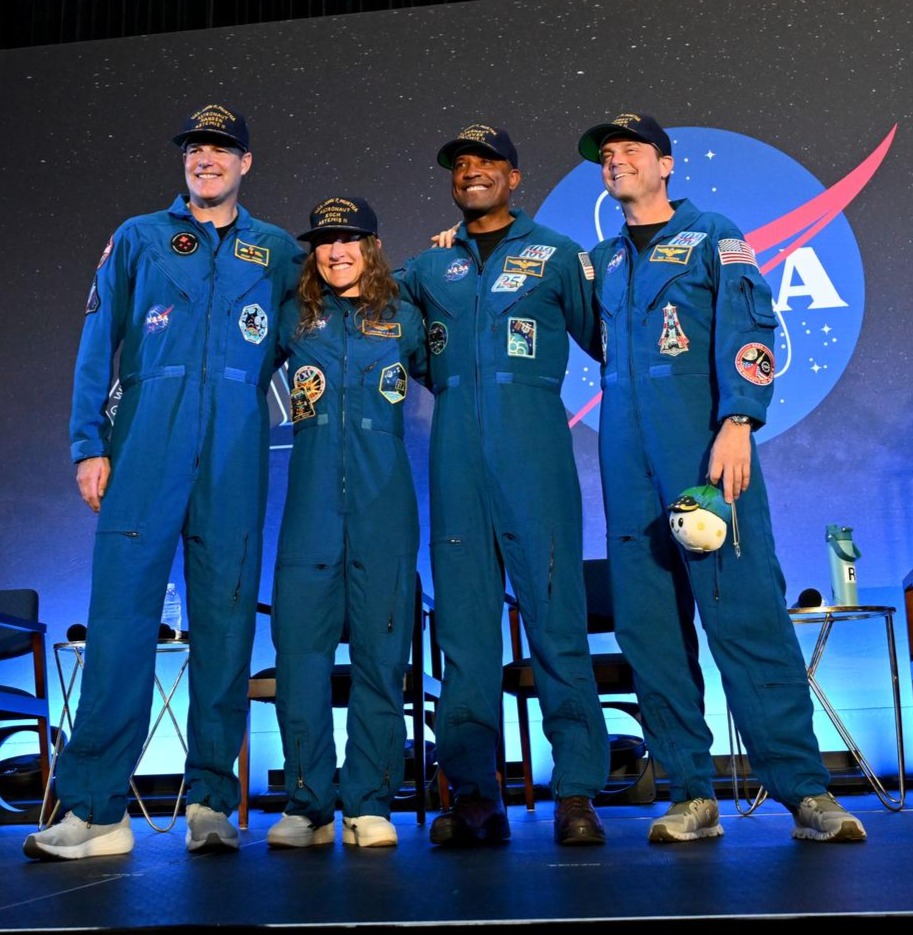
NASA’s Artemis II crew, NASA astronauts Reid Wiseman, commander; Victor Glover, pilot; Christina Koch, mission specialist; and CSA (Canadian Space Agency) astronaut Jeremy Hansen, shared brief remarks with friends, family, and colleagues after they landed at Ellington Airport near NASA’s Johnson Space Center in Houston on Saturday, April 11, 2026, after a nearly 10-day journey around the Moon and back to Earth. Credit: NASA/Helen Arase Vargas. Image Credit: Helen Arase Vargas / NASA-JSC



Leave a Reply